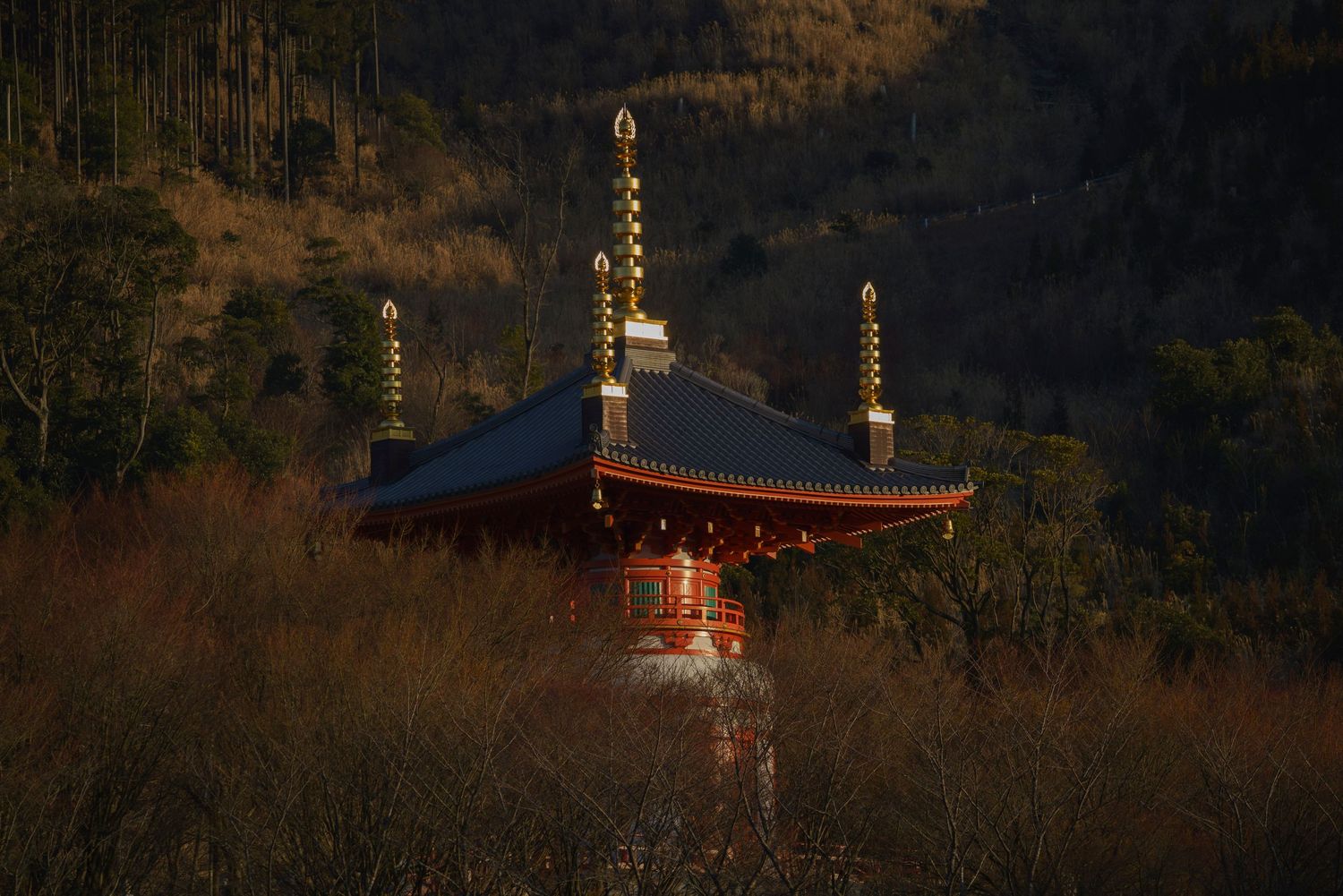
Driving around Sasaguri, northeast of Fukuoka, on a sunny late afternoon in February, I came upon an exceptional pilgrimage site, the Nomiyama Kannon-ji Temple. Although the site welcomes around a million visitors per year, on that winter day around 5 p.m., I was the sole person there. While the buildings were closed for the evening, I could freely explore the grounds. What a gift for a photographer to have a spiritual place of such significance, with striking statues and beautiful architecture, all to oneself in the peak light of sunset.
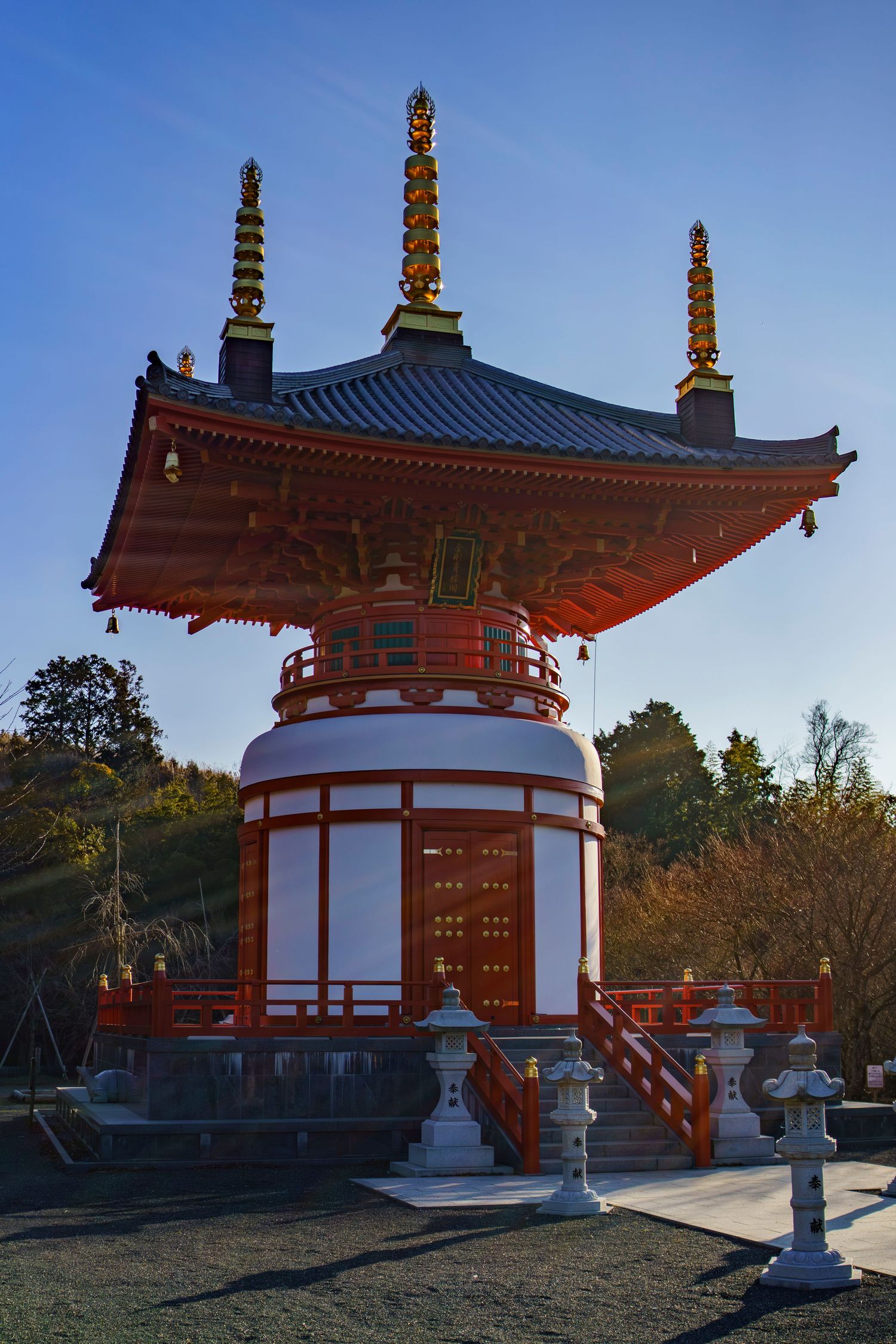
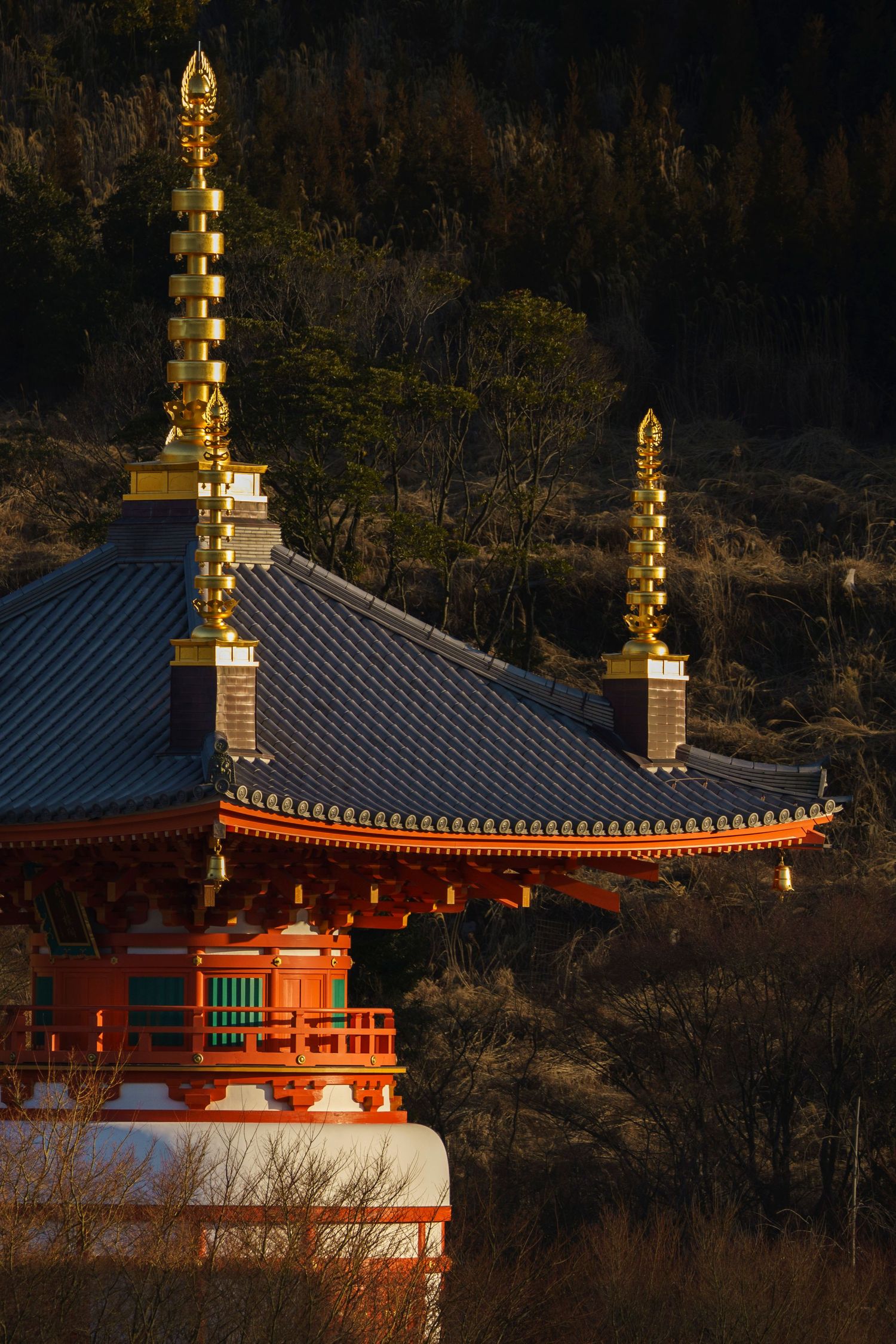
The Nomiyama Kannon-ji Temple (野身山観音寺), also known locally as "Nomiyama-san," is a major mountain temple of the Koyasan Shingon sect of Esoteric Buddhism. Situated at an elevation of 450 meters in the hills of Sasaguri, just northeast of Fukuoka City, it is a key stop on the 19th-century Sasaguri 88 Pilgrimage Route. The temple's primary image is the Senju Kannon (Thousand-Armed Kannon), a hidden statue revealed only on designated festival days.
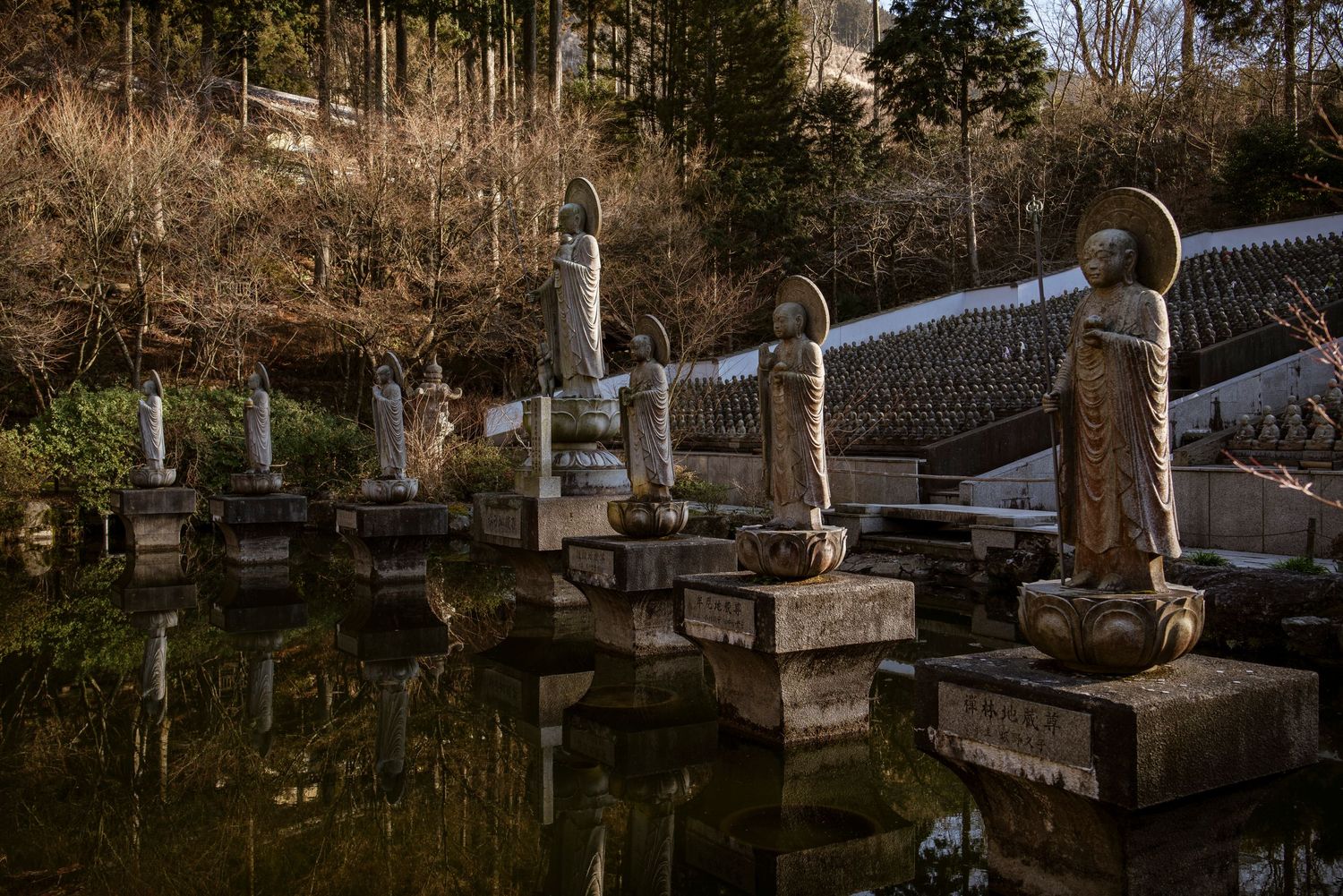
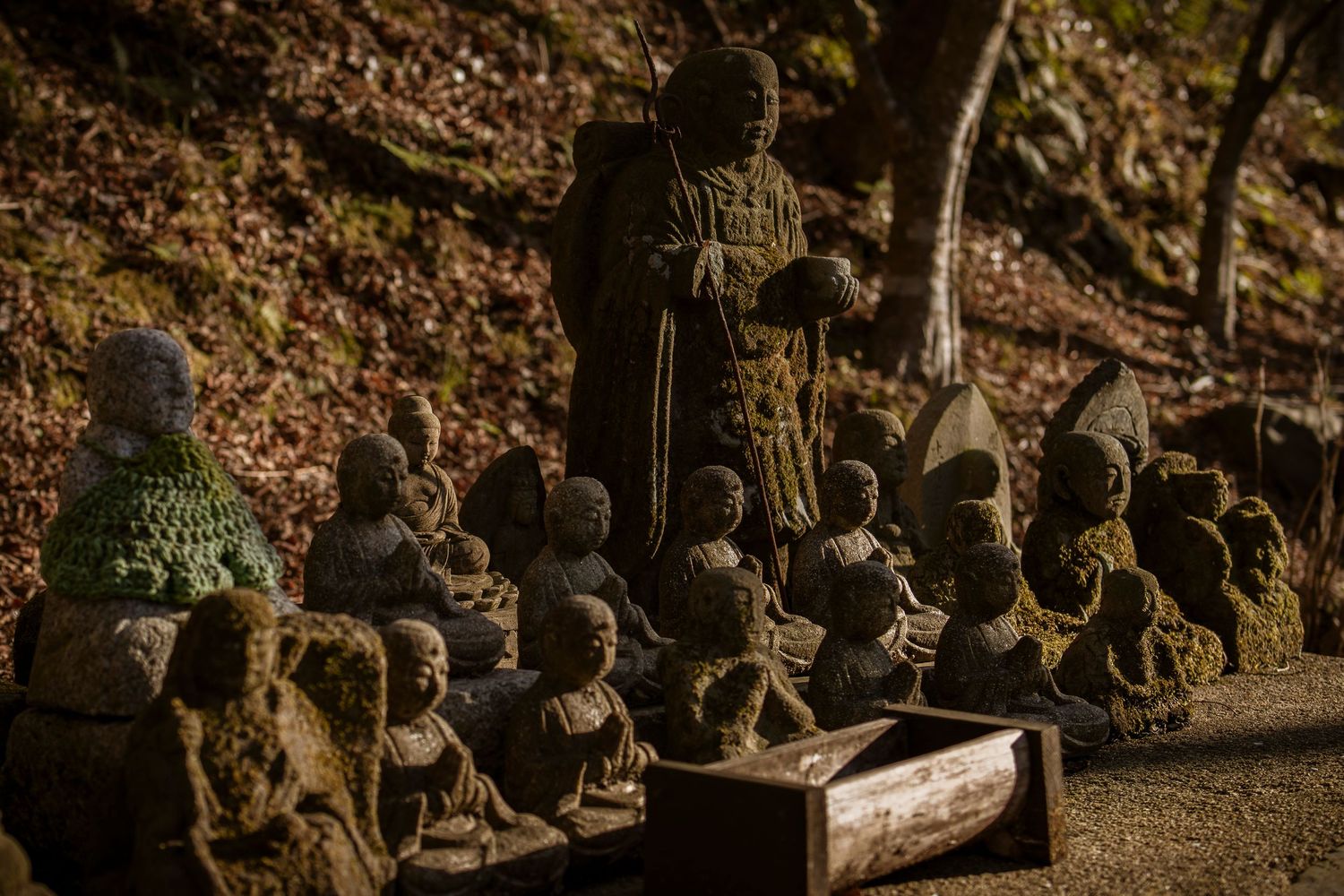
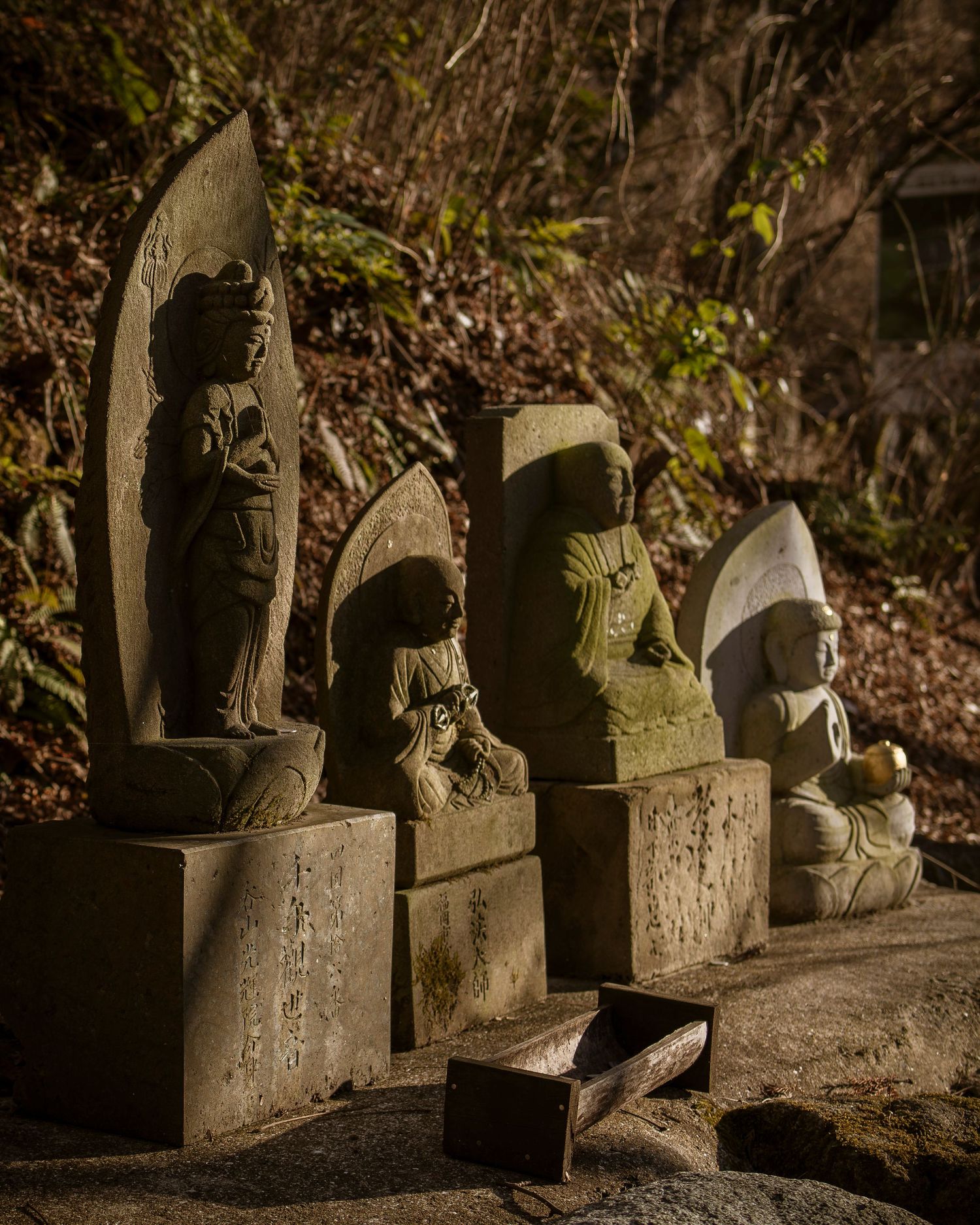
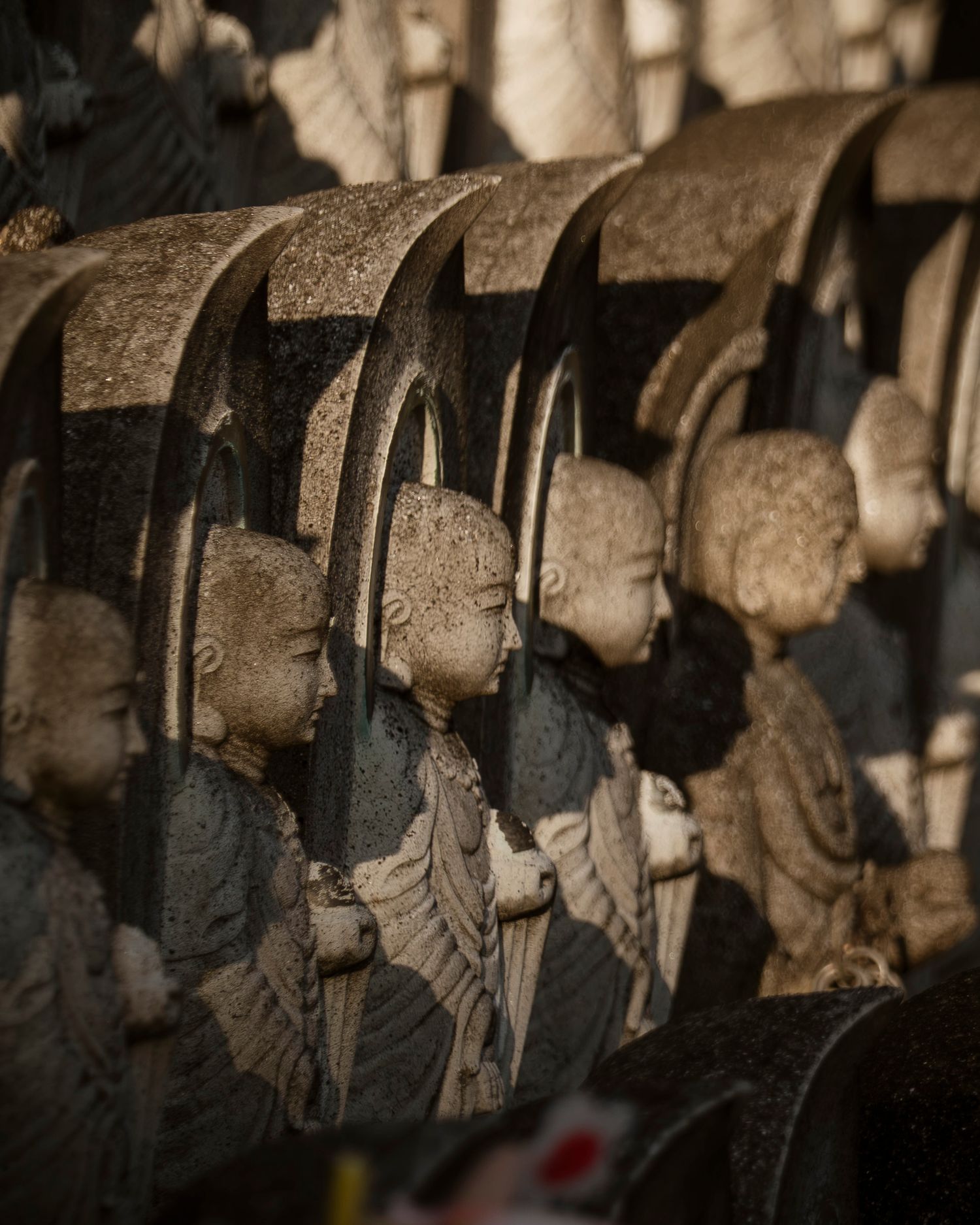
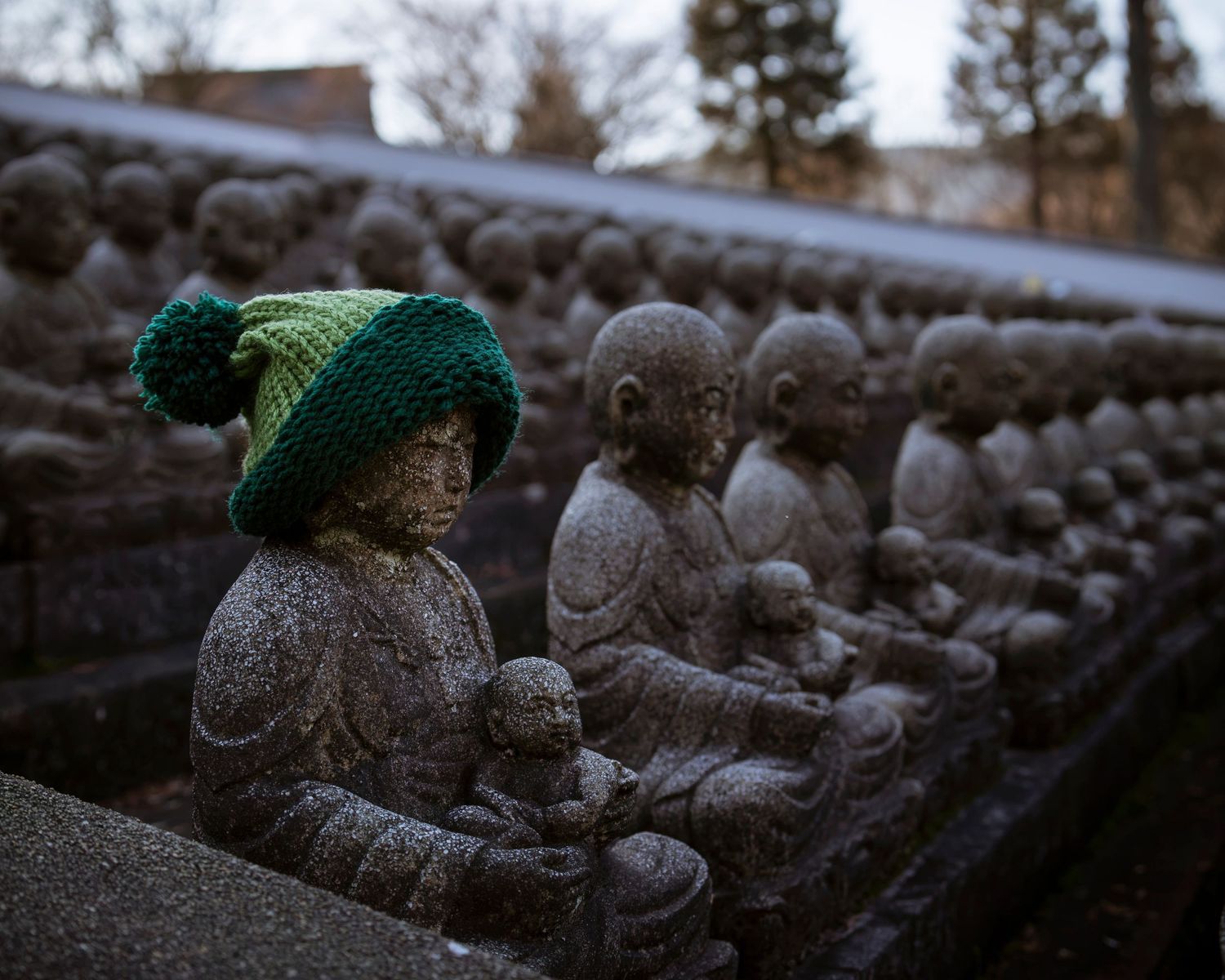
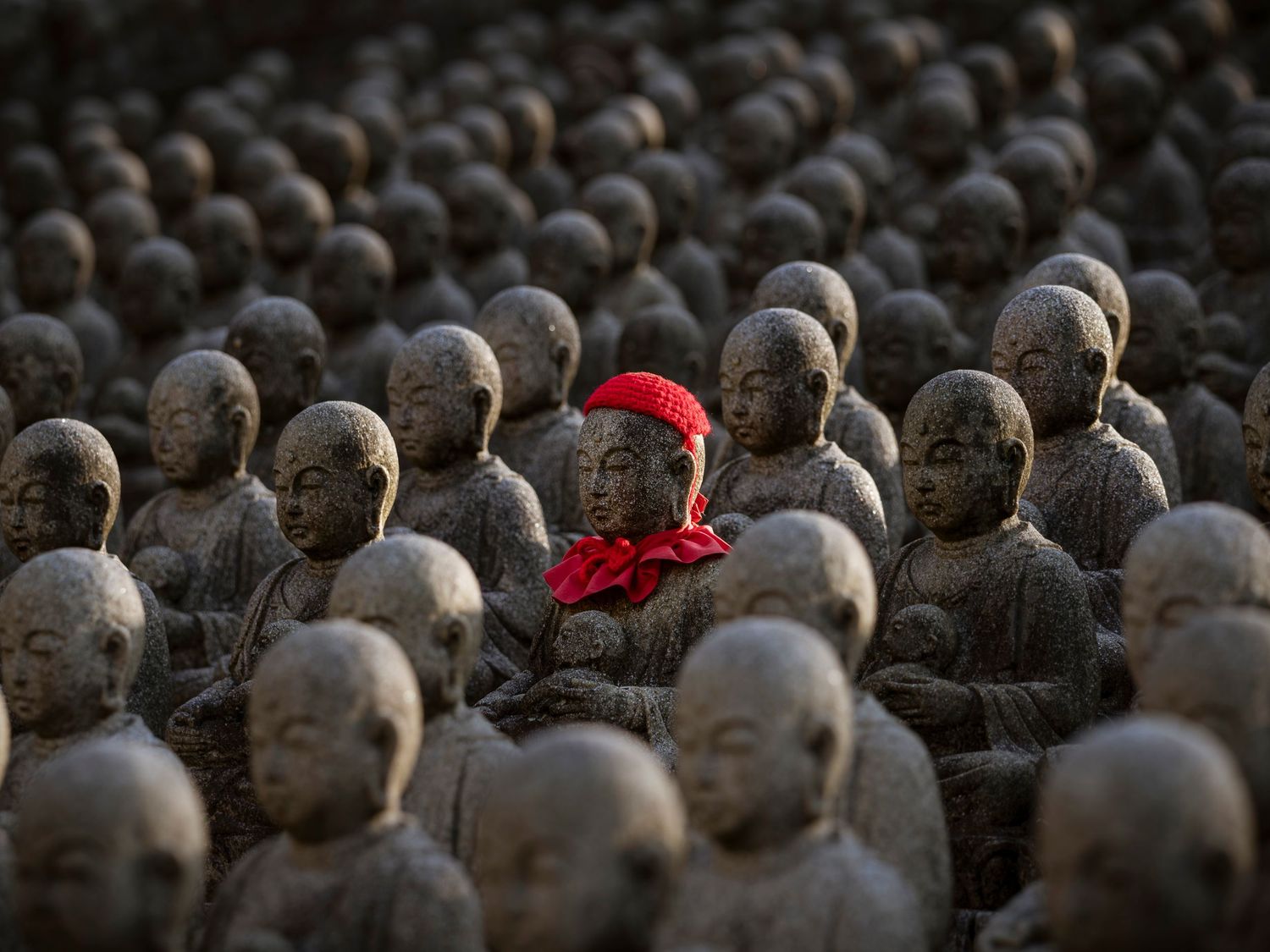
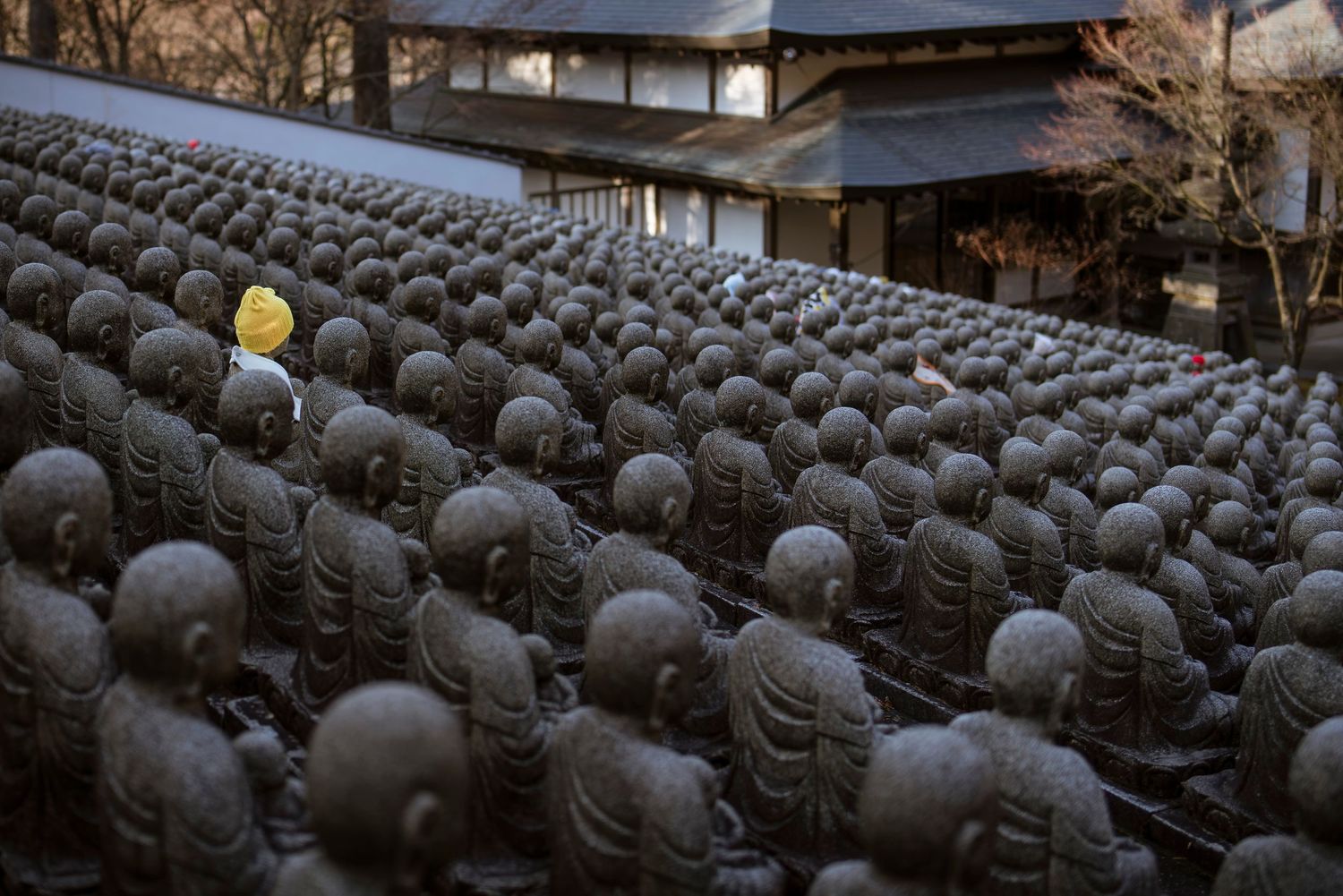
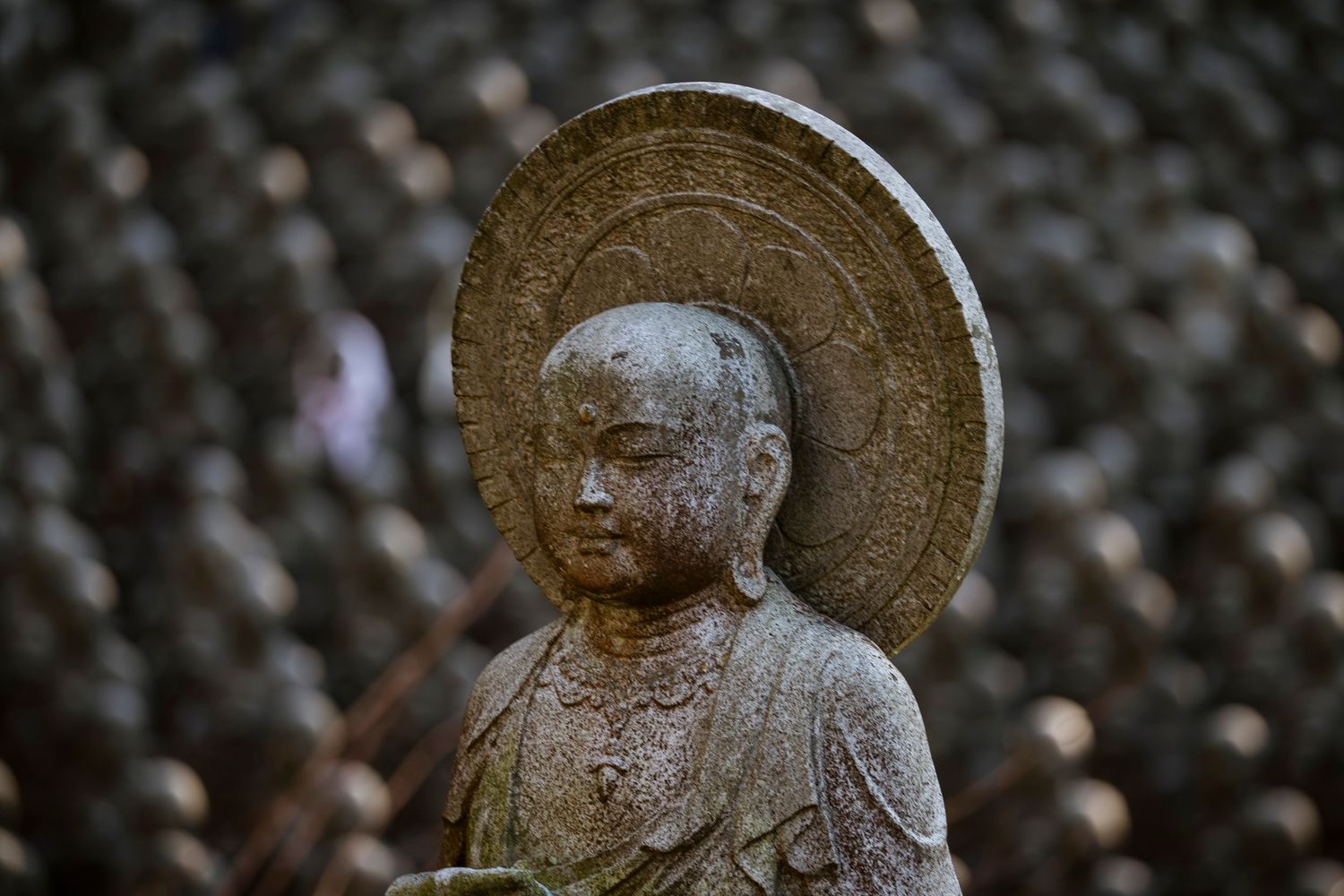
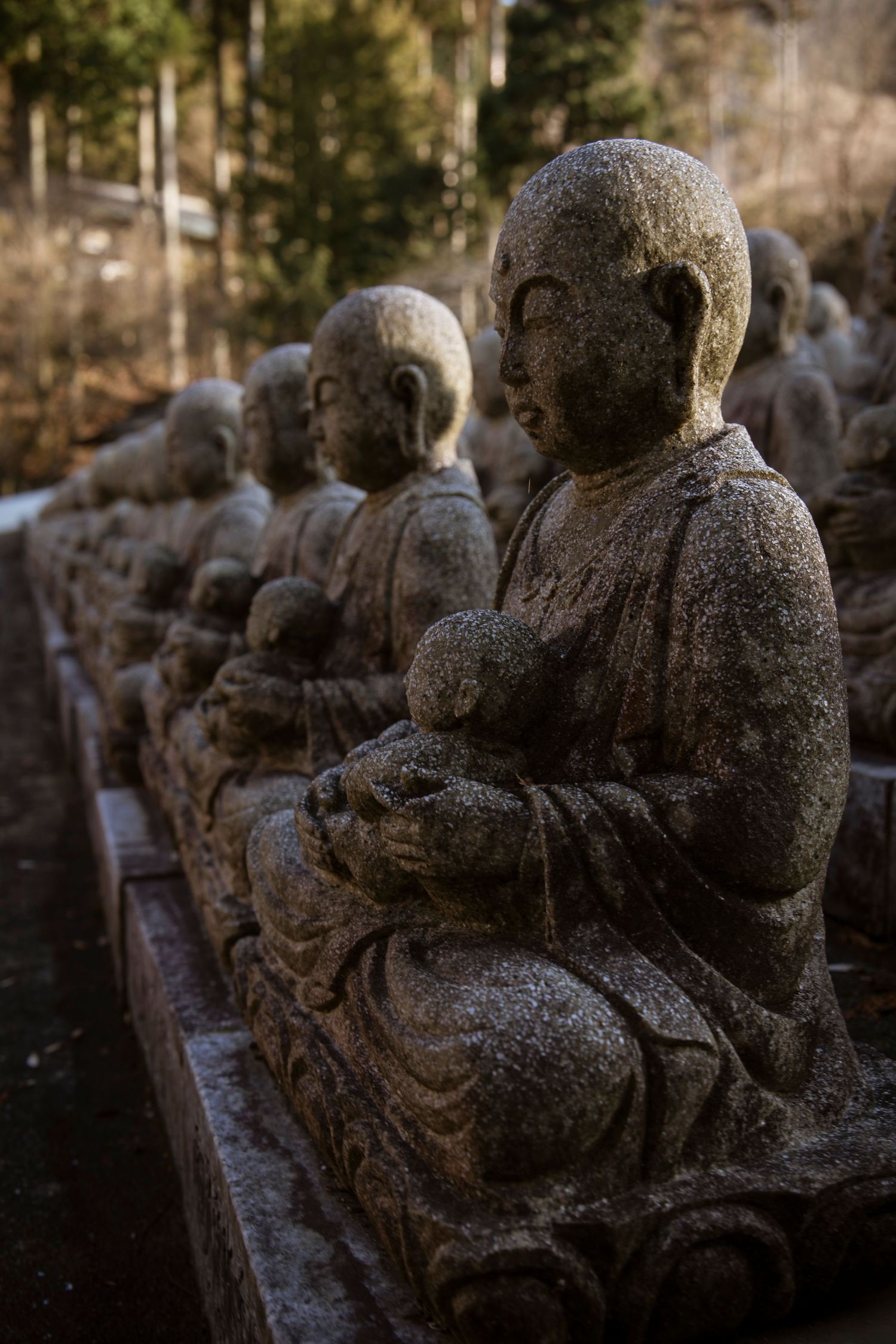
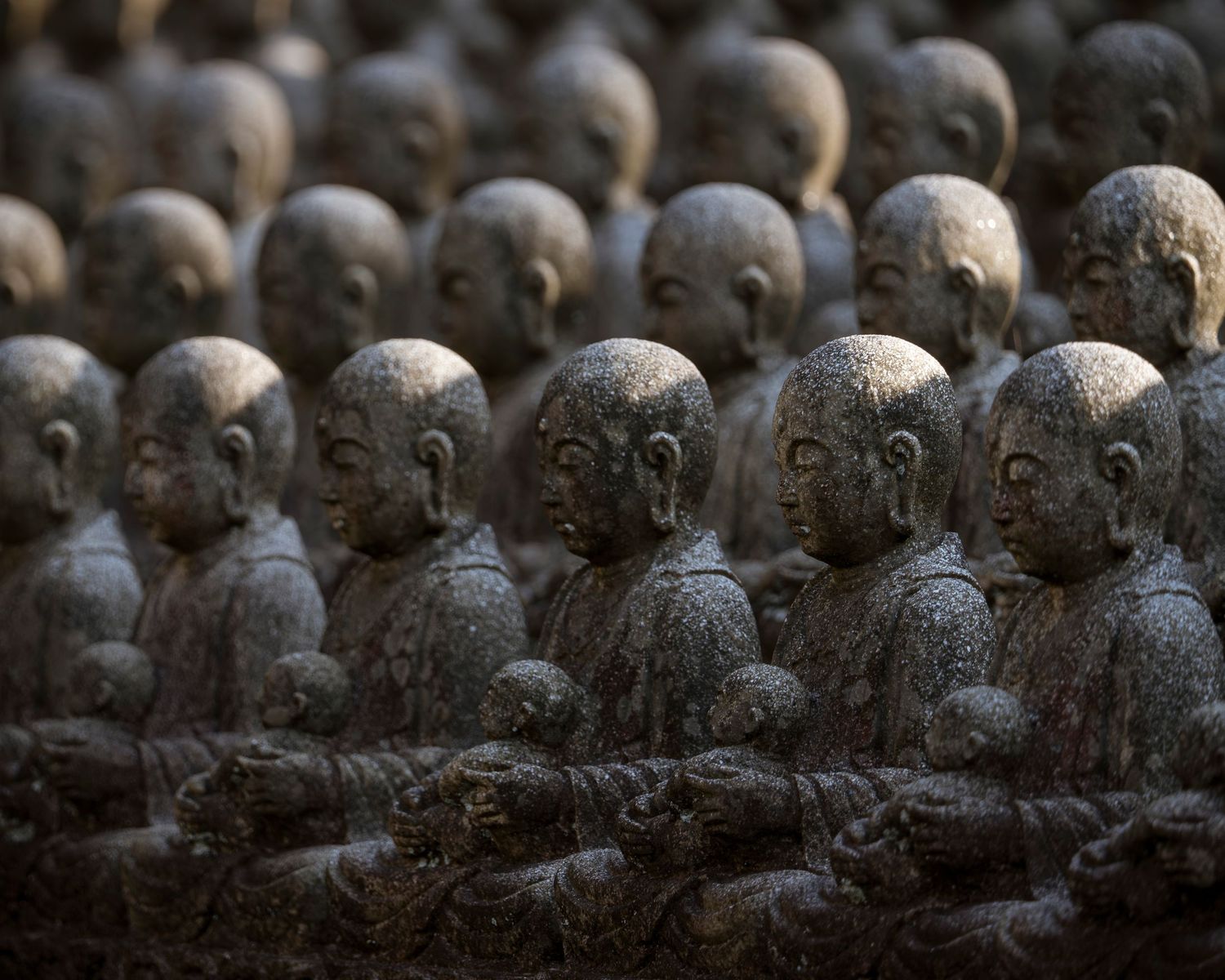
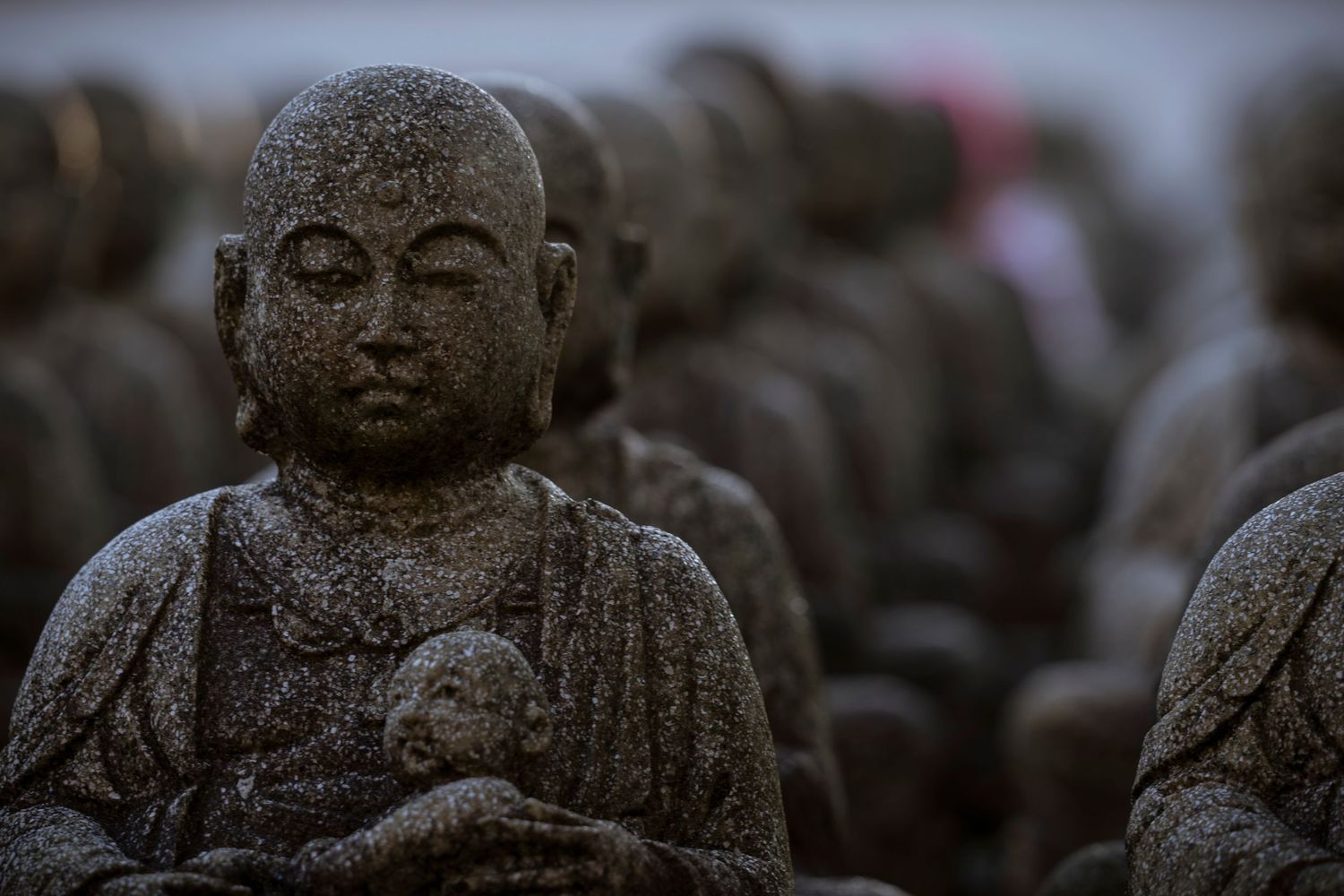
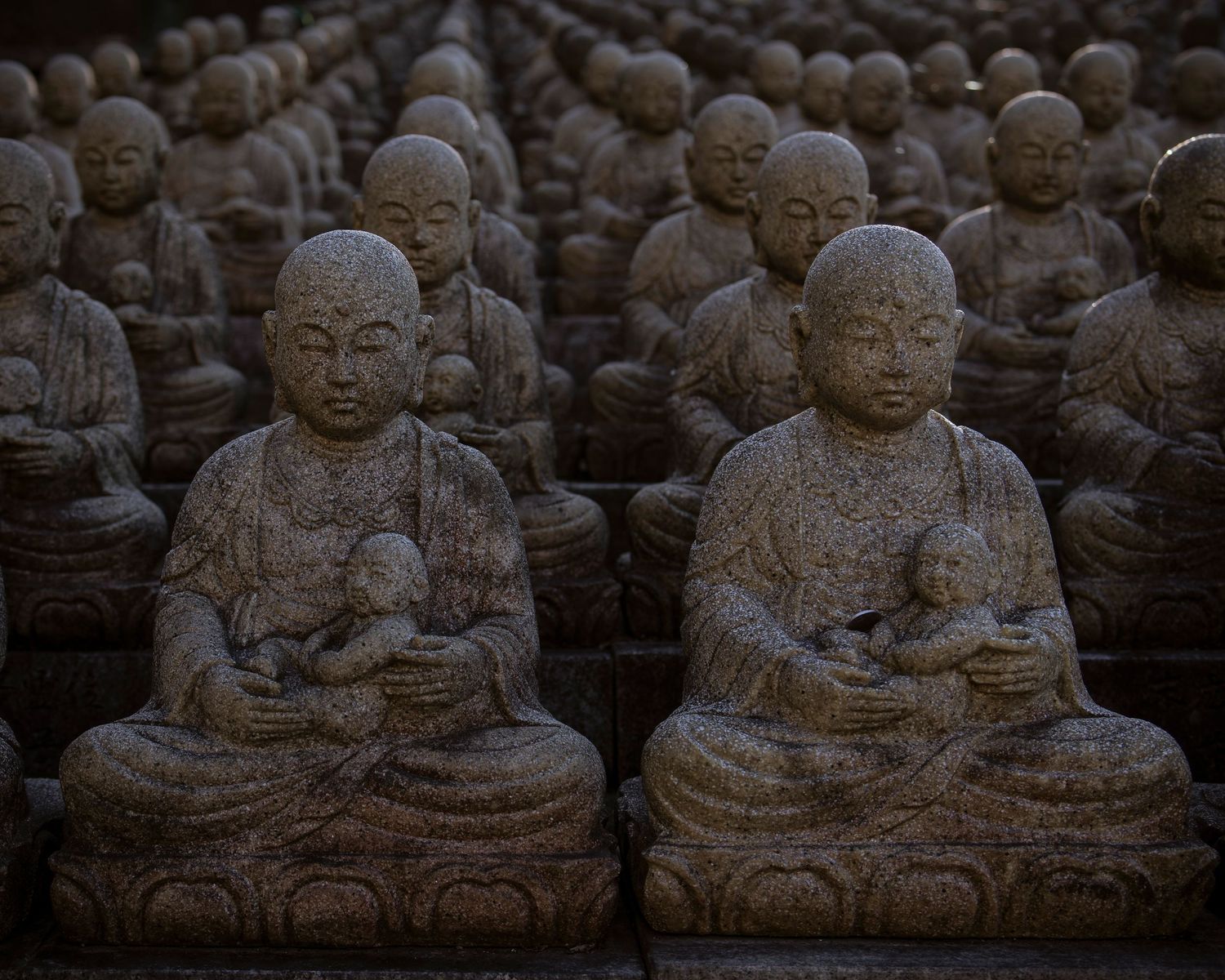
But undoubtedly, the main subject of this photo series, and one of the most striking visual features on the temple grounds, is the expansive sanctuary housing over 3000 small stone Mizuko Jizo statues. In Buddhism, a bodhisattva is an enlightened being who compassionately delays ultimate liberation to stay in the earthly realm and relieve the suffering of others; among them, Jizo is depicted as a gentle, shaved-headed monk who acts as the supreme protector of children. The term Mizuko refers to miscarried, stillborn, aborted, or prematurely deceased infants, whom Jizo tenderly shields on the banks of the Sanzu River to guide their young souls to the afterlife.
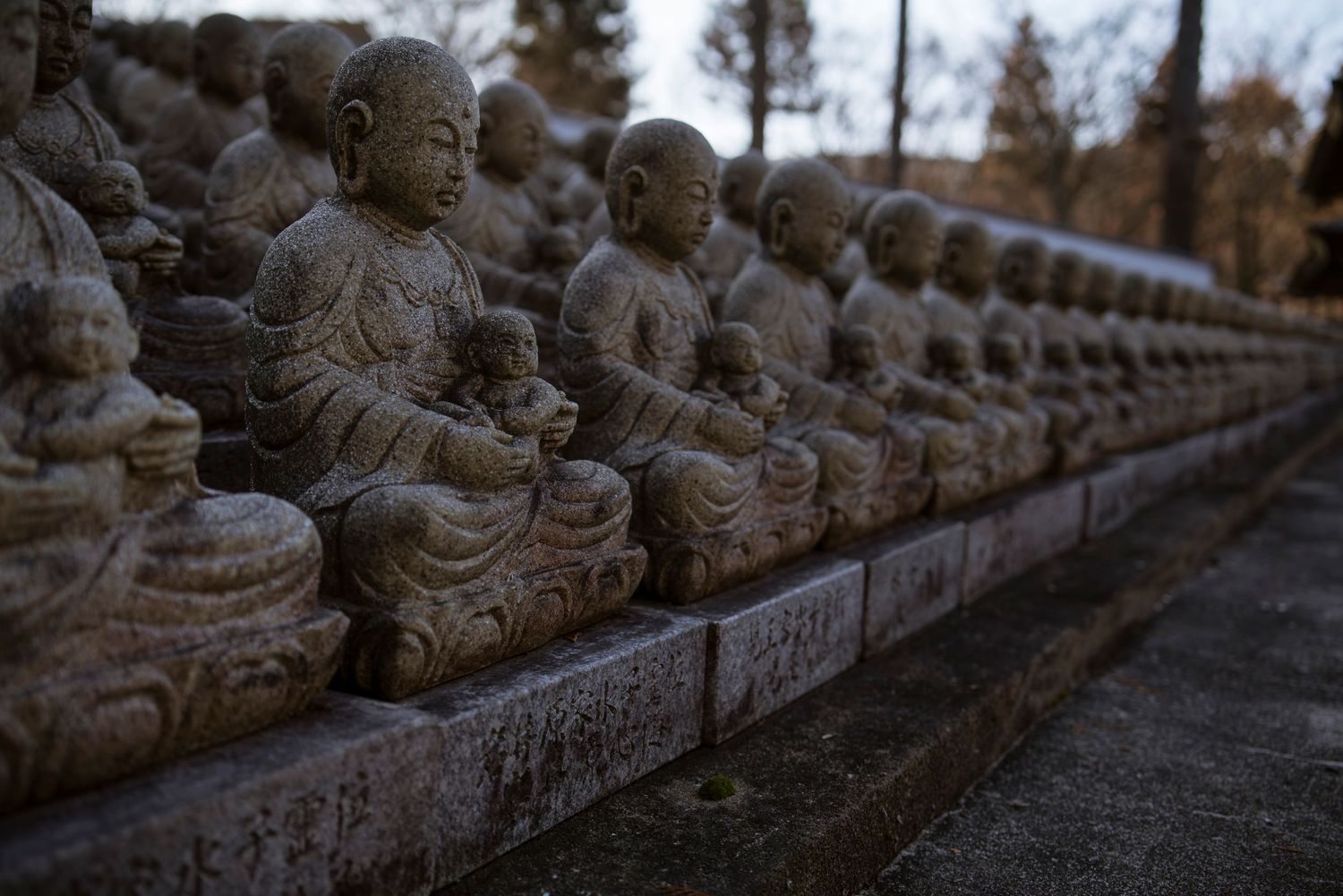
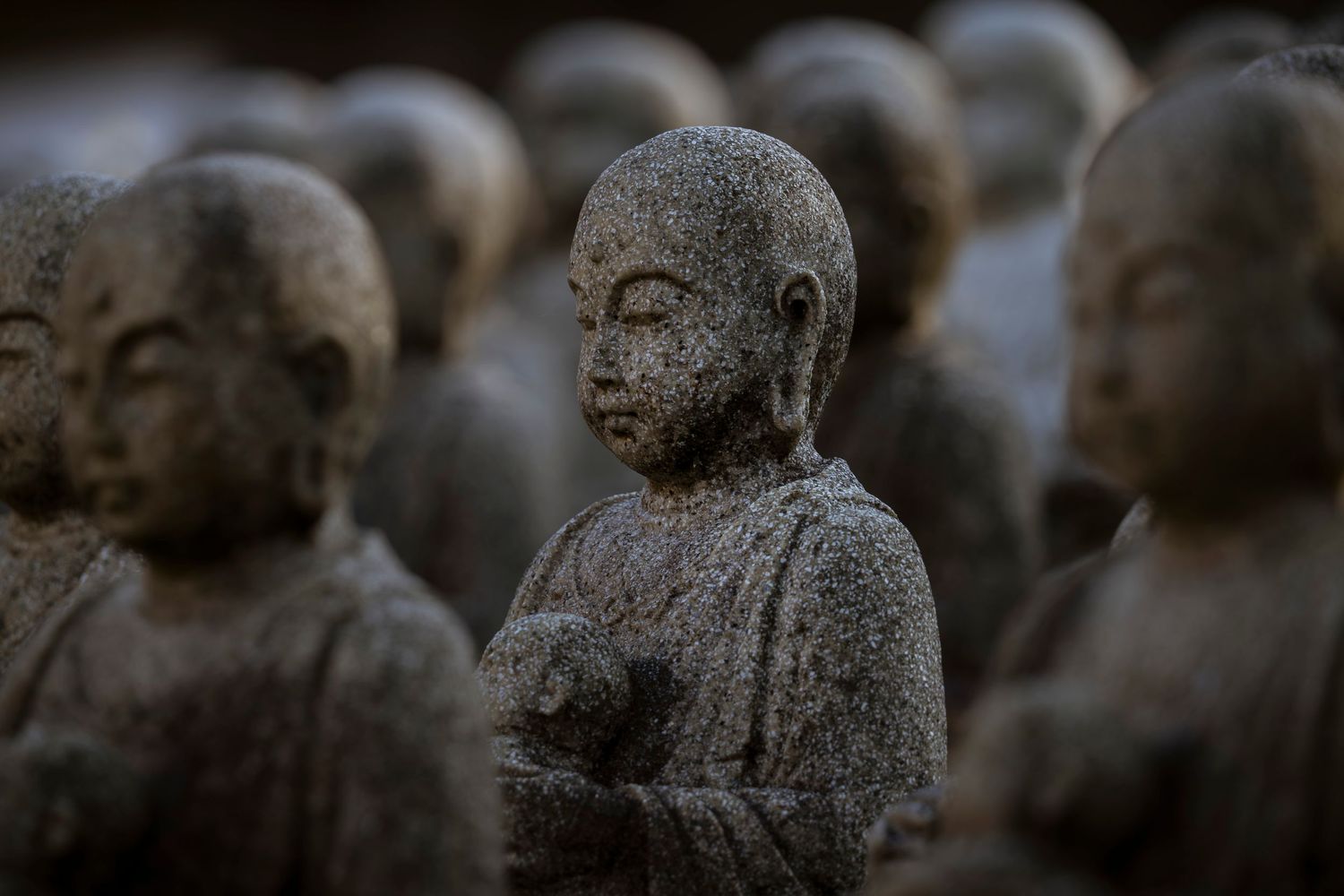
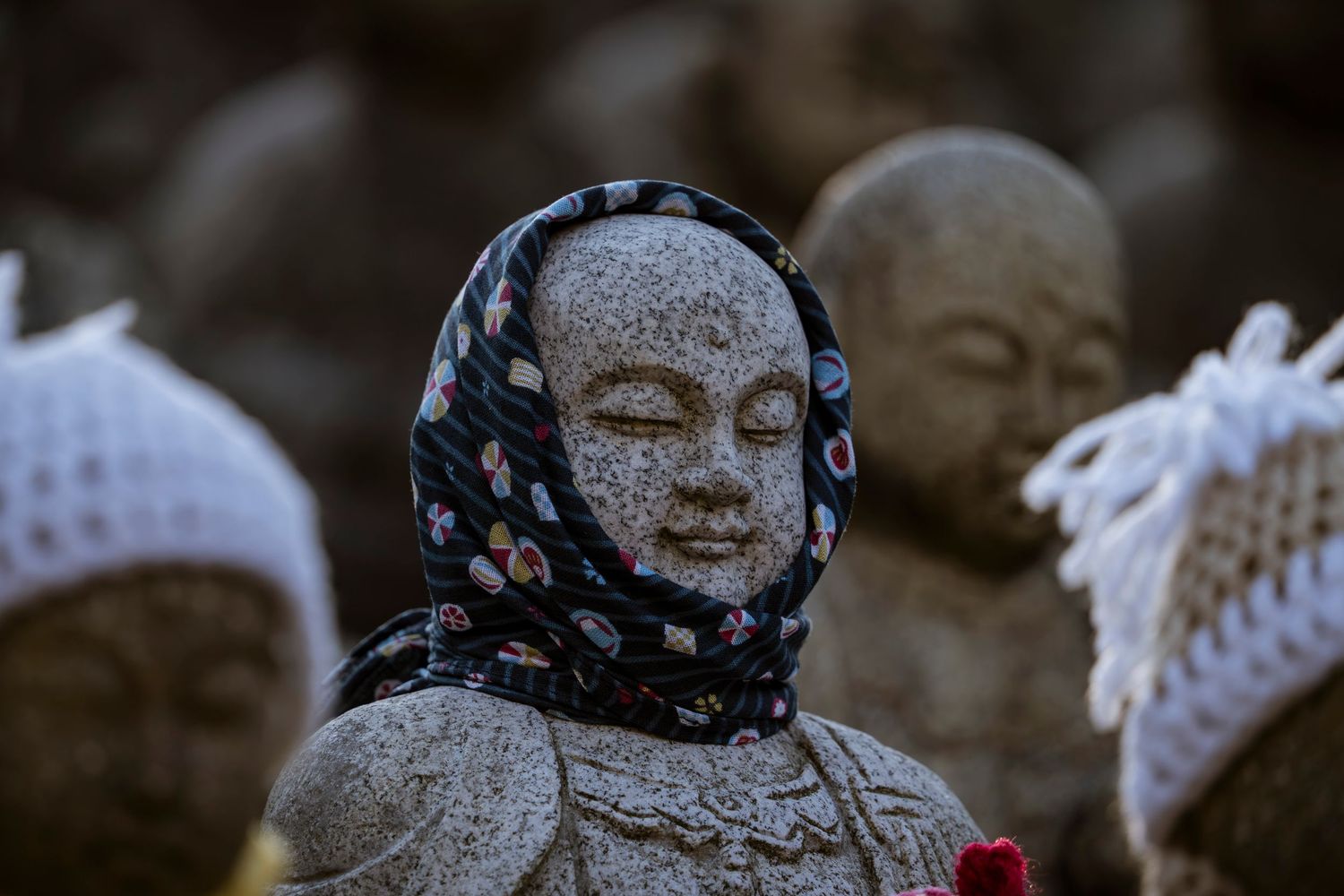
Dressed Mizuko Jizo
Visitors will notice the Mizuko Jizo statues dressed in hand-knitted woolen caps, scarves, and bibs left by grieving parents, relatives, and pilgrims. Placing these garments serves as a tangible act of parental love and a memorial ritual.